- add remove
- add remove
- Fashion design
- Are you looking for spare parts?
-
For other brands, spare parts, when available are displayed directly on the product page. If you can't find the spare part you need, contact us.
- Heading title
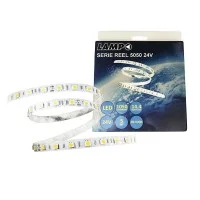 Lampo Strip LED 5050 60led/m 24V 14.4W/mt Reel 5M 72W Light color tone-3000°K WARM LIGHT, Version-IP20 For Indoor$74.69 $44.81
- On sale!
- -40%
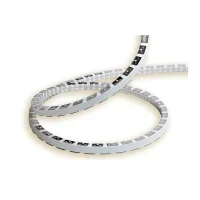 Alcapower Strip LED Snake Flex profile 11W/m 220V IP65 Dimmable Light color tone-3000°K WARM LIGHT, Lunghezza-5 meters$225.22 $157.66
- On sale!
- -30%
- add remove
- add remove
- add remove

Living Room

Kitchen

Bedroom

Office

Outdoor



























































- There are no more items in your cart
- Shipping
- Total $0.00


- add remove
- add remove
- Fashion design
- Are you looking for spare parts?
-
For other brands, spare parts, when available are displayed directly on the product page. If you can't find the spare part you need, contact us.
- Heading title Lampo Strip LED 5050 60led/m 24V 14.4W/mt Reel 5M 72W Light color tone-3000°K WARM LIGHT, Version-IP20 For Indoor$74.69 $44.81
- On sale!
- -40%
Alcapower Strip LED Snake Flex profile 11W/m 220V IP65 Dimmable Light color tone-3000°K WARM LIGHT, Lunghezza-5 meters$225.22 $157.66- On sale!
- -30%
- add remove
- add remove
- add remove
-
Living Room
-
Kitchen
-
Bedroom
-
Office
-
Outdoor
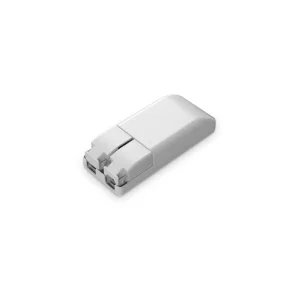
Sku: 276205
Ideal Lux Bit Rocket Ultramini Twiggy Power Supply IP44 350mA: ultra-compact constant current LED driver with IP44 protection for professional technical lighting installations.
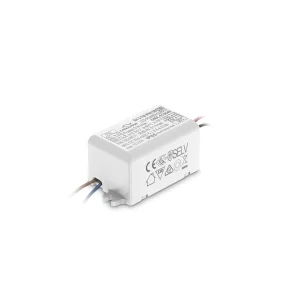
Sku: 325163
Ideal Lux Rocket ultramini power supply IP65 700mA, constant current LED driver with IP65 protection and ultra-compact dimensions for professional installations.
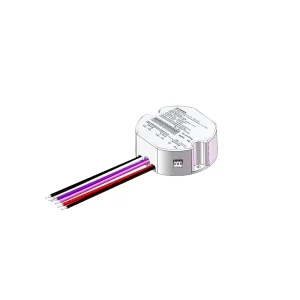
Sku: KI2-0301A05-TMW
Scpower Mini CC LED Driver 30W with selectable constant current output from 300 to 1050 mA via DIP switch, Triac and 0/1-10V dimmable, 100–240 V input, IP20.
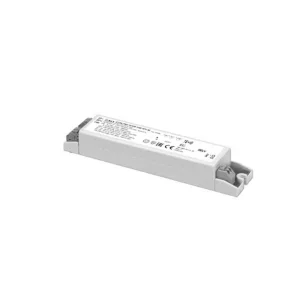
Sku: 151376
TCI Aton DALI 38 NFC BI is a 38 W constant current LED driver with NFC programming and DALI-2 and PUSH dimming for professional lighting applications.
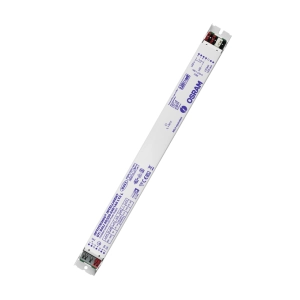
Sku: OTDALI801A6
Osram Power Supply Optotronic OTi DALI 80/220-240/1A6 LT2 L, constant current LED driver 160-1600 mA, 220-240 V input, IP20, DALI compatible.
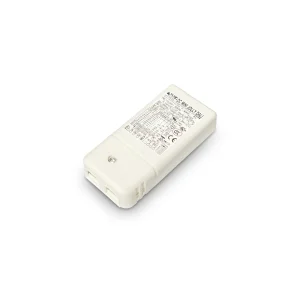
Sku: 270333
Fly Alimentatore 500mA is an Ideal Lux accessory from the Fly collection, for completing or replacing parts of the lighting system.
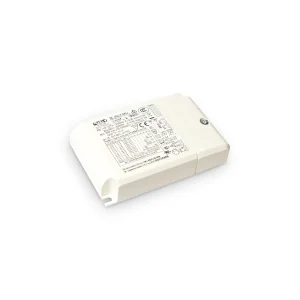
Sku: 270586
Fly Alimentatore 700mA is an Ideal Lux accessory from the Fly collection, for completing or replacing parts of the lighting system.
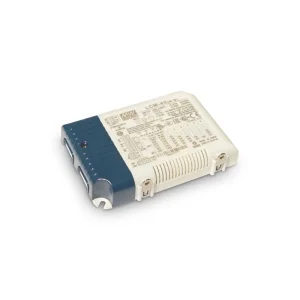
Sku: 270340
Fly Alimentatore 1400mA is an Ideal Lux accessory from the Fly collection, for completing or replacing parts of the lighting system.
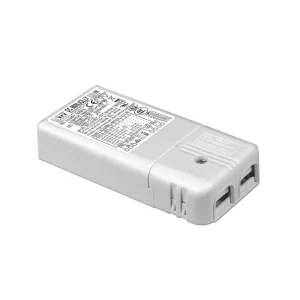
Sku: 151400
TCI DC Mini Jolly 20 LED driver, constant current 250–900mA, 1-10V Push dimmable, universal input 100-240V, IP20.
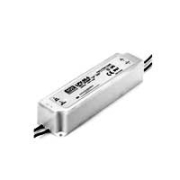
Constant current power supplies
Constant Current Electronic Drivers for LED Applications: the Mean Well Range at Diffusione Luce
Diffusione Luce offers a complete range of constant current electronic drivers for LED applications. Professional drivers designed to power spotlights, modules, and LED chips with maximum stability, ensuring durability, efficiency, and protection of the diode over time.
How to choose the right constant current driver
To choose the correct constant current driver, a simple calculation is required:
Current absorbed by the LED spotlight × operating voltage of the spotlight = power consumption
Practical example: 0.350 A × 3.4 V = 1.2 W (power absorbed by the spotlight). In this case, you need to choose a driver with an output power starting from 1.2W and a current of 0.350 A.
Warning: do not oversize the driver
It is essential not to install drivers with a minimum output power higher than the nominal power absorbed by the spotlight. Example of an incorrect match: a 1.2W and 350mA spotlight connected to a driver that starts from 4W and 350mA → immediate failure of the LED diode.
This is one of the most common mistakes in LED installations: unlike constant voltage drivers, constant current drivers always deliver the rated current setting. Therefore, if the minimum power of the driver exceeds that of the connected LED, the voltage rises beyond the diode's limits, causing it to fail.
Connecting multiple LED spotlights in series
The situation is different when multiple LED spotlights are installed in series. In this case, to calculate the driver's power, you need to add up the power of the individual spotlights.
Practical example: 10 spotlights of 1.2W and 350mA → 12W total at 350mA. The required driver must have a nominal power of at least 12W with an output current of 350mA. The current remains unchanged because in a series connection all LEDs are crossed by the same current, while the operating voltages add up.
Mean Well drivers for outdoor applications IP65 and IP67
For outdoor installations, Mean Well electronic drivers with IP65 and IP67 protection ratings are available, certified to withstand dust, water jets, and temporary immersion. They are the ideal solution for garden spotlights, outdoor step lights, architectural outdoor lighting, pool edge lighting, and applications in humid environments such as bathrooms, laundries, and industrial areas.
Why choose Mean Well
Mean Well has been the international reference point for decades for those seeking professional-quality constant current LED drivers. Mean Well products are certified according to the main international standards (CE, TÜV, UL, CB, RoHS), offer complete protection against overvoltage, overcurrent, short circuit, and overtemperature, and are covered by extended warranties that testify to their construction reliability.