- add remove
- New Items →
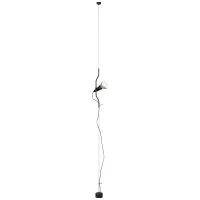 Flos Parentesi suspension floor lamp Color-Black, Version-ON-OFFSAR1,909.43 SAR1,623.02
- On sale!
- -15%
- add remove
- Fashion design
- Are you looking for spare parts?
-
For other brands, spare parts, when available are displayed directly on the product page. If you can't find the spare part you need, contact us.
- Heading title
 Lampo Strip LED 5050 60led/m 24V 14.4W/mt Reel 5M 72W Light color tone-3000°K WARM LIGHT, Version-IP20 For IndoorSAR202.57 SAR121.54
- On sale!
- -40%
 Alcapower Strip LED Snake Flex profile 11W/m 220V IP65 Dimmable Light color tone-3000°K WARM LIGHT, Lunghezza-5 metersSAR610.82 SAR427.57
- On sale!
- -30%
- add remove
- add remove
- add remove
Living Room
Kitchen
Bedroom

Office
Outdoor








































- There are no more items in your cart
- Shipping
- Total SAR0.00


- add remove
- New Items → Flos Parentesi suspension floor lamp Color-Black, Version-ON-OFFSAR1,909.43 SAR1,623.02
- On sale!
- -15%
- add remove
- Fashion design
- Are you looking for spare parts?
-
For other brands, spare parts, when available are displayed directly on the product page. If you can't find the spare part you need, contact us.
- Heading title Lampo Strip LED 5050 60led/m 24V 14.4W/mt Reel 5M 72W Light color tone-3000°K WARM LIGHT, Version-IP20 For IndoorSAR202.57 SAR121.54
- On sale!
- -40%
Alcapower Strip LED Snake Flex profile 11W/m 220V IP65 Dimmable Light color tone-3000°K WARM LIGHT, Lunghezza-5 metersSAR610.82 SAR427.57- On sale!
- -30%
- add remove
- add remove
- add remove
-
Living Room
-
Kitchen
-
Bedroom
-
Office
-
Outdoor
Iconic designer lamps: masterpieces that made history
There are lamps designed to illuminate a space and others that, over time, become true symbols of design. Some are recognisable for their shape, others for their materials, and others still for the way they revolutionised the relationship between light, function and space.
The most famous designer lamps are not necessarily the most complex. Their success often begins with a simple idea capable of changing the way interiors are experienced. From essential geometry to organic forms, each project tells the story of an era and a different way of living.
Among the collections available at Diffusione Luce, we have selected twelve iconic lamps that have shaped the history of lighting design and continue to be chosen today for homes, offices and public spaces.
When geometry becomes instantly recognisable
Many icons are born from the combination of elementary geometric forms. Spheres, cones and cylinders are brought together with such precision that they become immediately recognisable objects.
One of the most important examples is Bilia by FontanaArte, designed by Gio Ponti in 1932. A luminous glass sphere rests on a conical base, creating an essential composition that appears to challenge balance and still retains a contemporary character today.
The same research can be found in Atollo by Oluce, designed by Vico Magistretti in 1977. A cylinder, cone and hemisphere create a small domestic architecture. The large shade conceals the light source and appears to float above the base, producing an indirect and enveloping light.
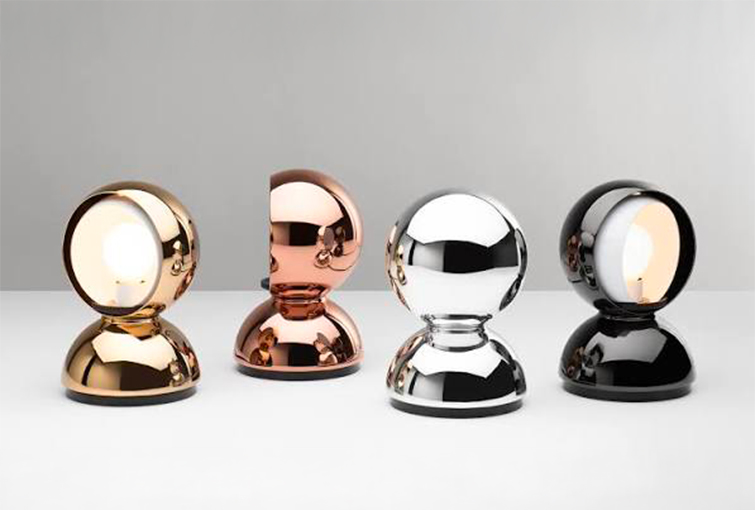
Between these two projects stands Eclisse by Artemide, designed by Vico Magistretti in 1965. A rotating internal screen gradually covers the bulb, changing the light with a simple gesture.
Bilia, Eclisse and Atollo demonstrate that the strength of an icon does not depend on complexity, but on the ability to make an essential form memorable.
Solutions that changed the way spaces are illuminated
Some lamps became famous because they transformed practical problems into design solutions made to last.
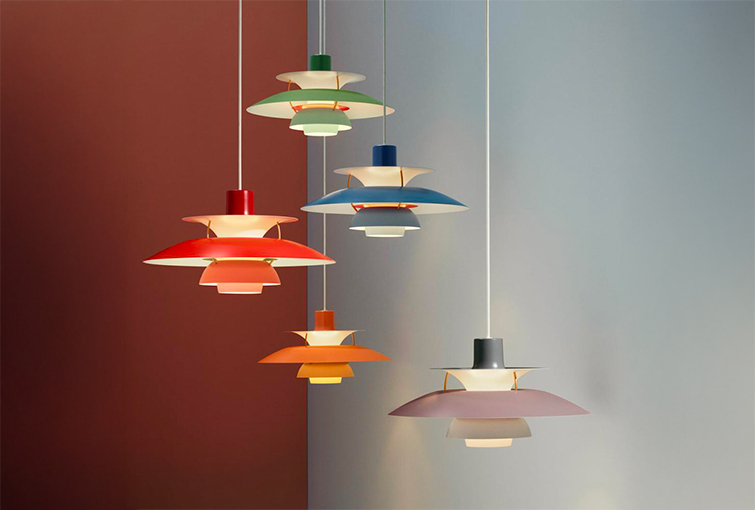
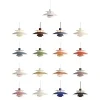
This is the case with PH 5 by Louis Poulsen, designed by Poul Henningsen in 1958. Its system of layered shades distributes light evenly and reduces glare, making it ideal above a dining table or kitchen island.
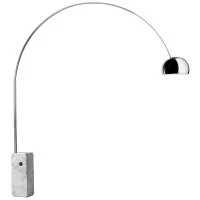
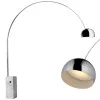
In 1962, Achille and Pier Giacomo Castiglioni designed Arco by Flos, created to bring light above a table without installing a pendant lamp. The Carrara marble base supports a long curved steel stem that extends towards the centre of the room.
Even the famous hole in the base serves a precise function: it allows the lamp to be moved with the help of a rod. In Arco, every aesthetic detail originates from a practical need.
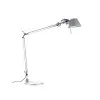
The same principle can be found in Tolomeo by Artemide, designed in 1987 by Michele De Lucchi and Giancarlo Fassina. Movable arms, springs and joints allow the light to be directed with precision, turning the technical structure into an integral part of the design.
PH 5, Arco and Tolomeo changed the way light is directed and controlled, showing how function and beauty can coincide.
When a lamp becomes a sculpture
In other projects, light is entrusted to objects with a strong scenic presence. Even when switched off, these lamps continue to furnish the space through their proportions, materials and unmistakable silhouettes.
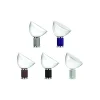
Taccia by Flos, designed in 1962 by the Castiglioni brothers, resembles a large overturned industrial spotlight. Its ribbed base supports an adjustable diffuser that directs light upwards, creating indirect illumination and an almost monumental presence.
An equally striking character distinguishes Pipistrello by Martinelli Luce, designed by Gae Aulenti in 1965. The diffuser opens like a pair of wings, while the telescopic stem allows its height to be adjusted and adapted to different uses.
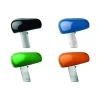
With Snoopy by Flos, created in 1967, the Castiglioni brothers introduced a more ironic tone. Its profile recalls the famous cartoon character, while the tilted reflector rests on a solid cylindrical marble base.
Taccia, Pipistrello and Snoopy represent three different ways of interpreting a sculptural lamp: industrial, organic and playful. In all three cases, light also becomes a visual presence.
Colour, decoration and expressive freedom
From the 1970s onwards, lighting design began to explore softer forms, colour and new materials with greater freedom.
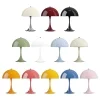
This research is evident in Panthella by Louis Poulsen, designed by Verner Panton in 1971. The hemispherical diffuser and base are joined by a continuous line, creating a fluid silhouette. Both the shade and the stem contribute to the diffusion of light, producing a soft and welcoming atmosphere.
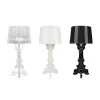
With Bourgie by Kartell, designed in 2004 by Ferruccio Laviani, the relationship between form and material takes on an ironic character. The lamp recalls the structure of classic table lamps, but recreates it in transparent, coloured or metallic polycarbonate. The result is a meeting between Baroque memory and industrial production.
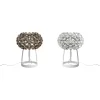
Another contemporary reinterpretation is Caboche by Foscarini, designed by Patricia Urquiola and Eliana Gerotto. A ring of transparent elements reflects and multiplies the light, evoking the brilliance of a jewel while maintaining a visually lightweight structure.
Panthella, Bourgie and Caboche show how design can use form, colour and decoration without sacrificing functionality.
How to choose an iconic lamp
Choosing an iconic lamp means introducing an object with a precise history into the space, but the fame of the design should not be the only criterion.
PH 5 is ideal above a dining table, while Arco provides overhead light without requiring changes to the ceiling. Tolomeo is perfect for a desk, while Bilia and Eclisse fit easily on a bedside table or shelf.
Atollo, Taccia and Pipistrello require more space to express their presence. Panthella creates a softer atmosphere, while Bourgie and Caboche are suitable for those looking for a more decorative statement piece.
Before purchasing, it is important to consider dimensions, function, light intensity and the relationship with the surrounding furnishings. A true icon does not necessarily have to dominate the room: it can become the focal point or blend into the space more discreetly, enhancing it through the quality of its light.
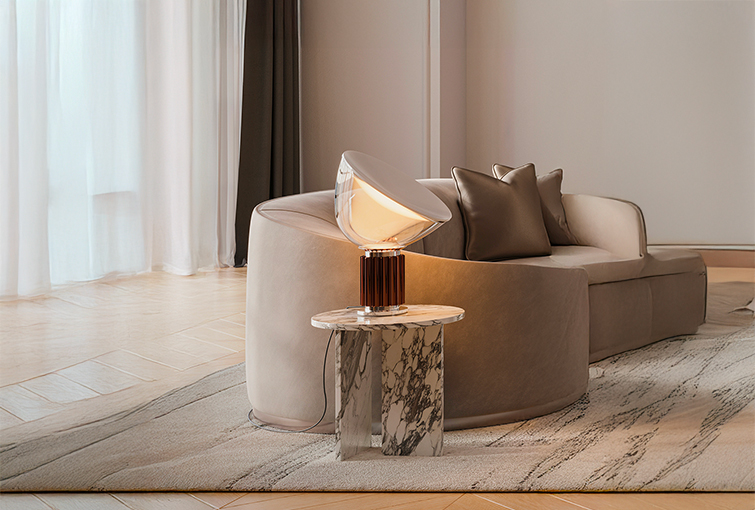
Lighting icons at Diffusione Luce
At Diffusione Luce, in Coriano near Rimini and Riccione, you can discover original lamps created by the most important Italian and international brands.
FontanaArte, Louis Poulsen, Flos, Artemide, Martinelli Luce, Oluce, Kartell and Foscarini represent different eras and design languages, united by the ability to transform a lighting fixture into an object made to endure over time.
Choosing an iconic lamp means bringing much more than a source of light into your home. It means living every day with a design that has transformed the way spaces are illuminated, furnished and experienced, helping to write an important chapter in the history of design!
Share this content
Related products
Fontana Arte Bilia table lamp
Oluce Atollo 238 small Gold Table Lamp
Artemide Eclisse table lamp
Louis Poulsen PH 5 300 Suspension
Flos Arco led floor lamp with marble base
Artemide Tolomeo E27 aluminum table lamp
Flos Taccia Small glass table lamp
Flos Snoopy Touch table lamp
Louis Poulsen Panthella 250 V3 Portable battery lamp
Kartell Bourgie table lamp
Foscarini Caboche Plus led table lamp